News
-
2026.09.15
Our laboratory’s BCI research using intracerebral electrode sheets was featured in Kyodo News and regional newspapers
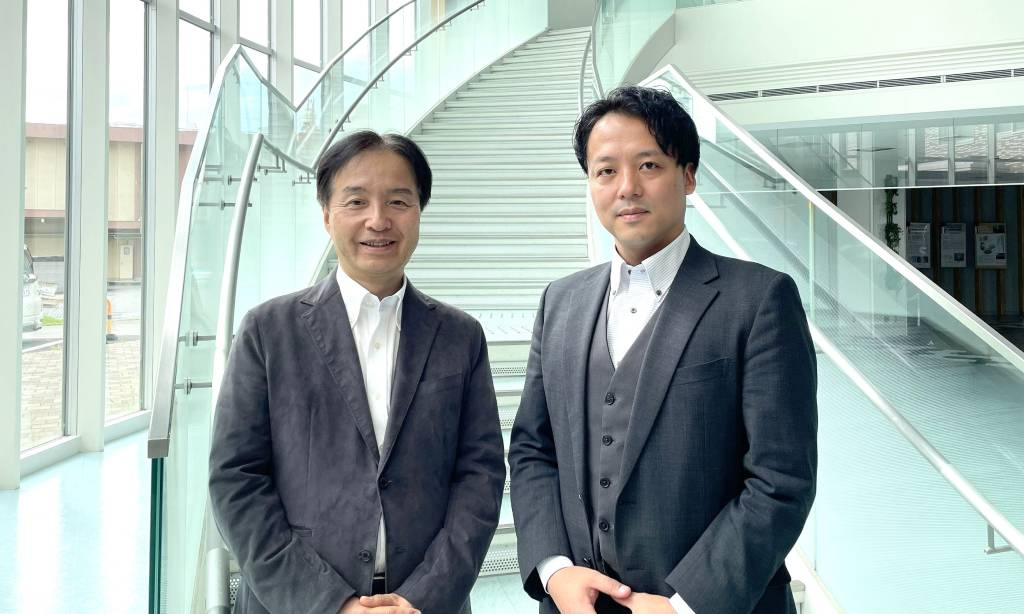
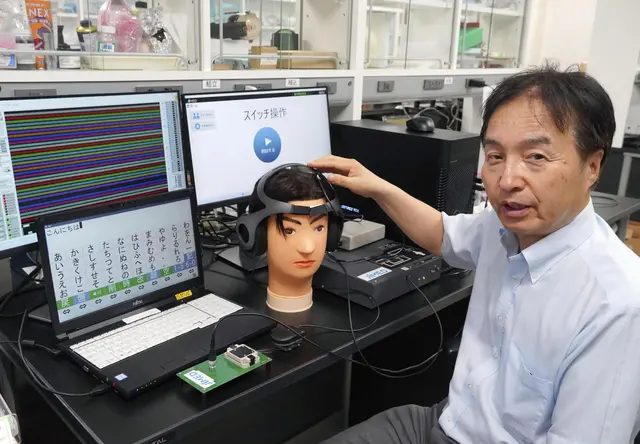
Our laboratory’s research on a new intracranial‑electrode BCI communication support technology for ALS patients was covered by Kyodo News and featured in several newspapers, including the Kyoto Shimbun and the Nishinippon Shimbun. It was introduced as a study scheduled to begin clinical trials within this year.
-
2026.09.03
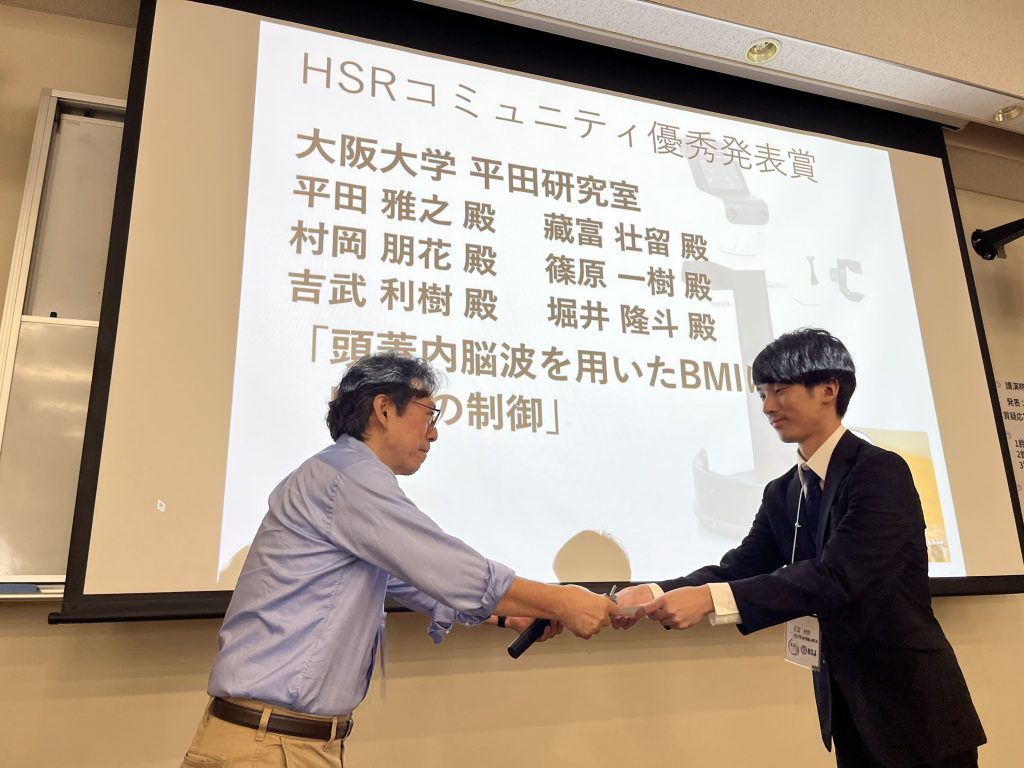
The presentation of our research, “HSR Control Using Intracranial EEG-Based BMI,” was honored with the Outstanding Presentation Award at the 2025 HSR Community Meeting.
-
2026.08.27
Results from a collaborative research project commissioned by NICT have been featured in Yomiuri Shimbun and several other media outlets.
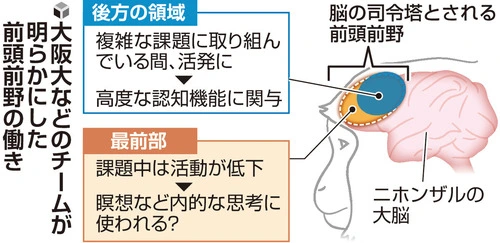
A research team from Osaka University and collaborating institutions has reported a new finding showing that the front-most region of the prefrontal cortex reduces its activity when tackling difficult tasks, while more posterior regions become more active. This conclusion is based on detailed measurements of neural activity in macaque monkeys and challenges the long‑standing assumption that the anterior prefrontal cortex is always responsible for higher-level cognitive processing.
Link →Yomiuri Online →Asahi Shinbun (Paid Article)
-
2026.07.02
The NHK programs “NHK News” and “Hot Kansai” featured a segment titled “Device to Interpret Brain Waves and Convey Intent for ALS Patients to Begin Clinical Trials in 2026.”
The invasive BMI technology developed with participation from our laboratory—designed to decode brain activity in ALS patients and enable communication—was introduced as moving toward Japan’s first clinical trial in 2026.
-
2026.07.02
JiMED’s implantable BCI clinical trial plan has been featured in Dow Jones Yomiuri Shimbun Pro.
The article published on June 19, 2026, titled “Communication via Brain Waves: Osaka University Startup to Begin Clinical Trials for a Device for Patients with Intractable Diseases,” introduced JiMED’s clinical trial plan for an implantable BCI designed for ALS patients.
-
2026.07.02
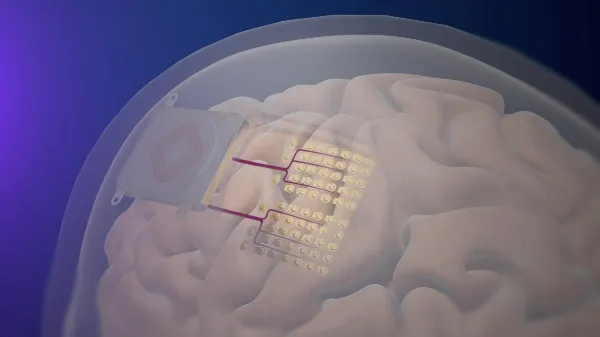
JiMED Inc. has raised 330 million yen to advance preparations for the clinical trial of the implantable BCI
As an Osaka University–originated startup, JiMED is advancing preparations for clinical testing of the wiBCI medical device for ALS patients and enhancing partnerships with collaborators in Japan and abroad.
JiMED’s wiBCI medical device
-
2026.07.02
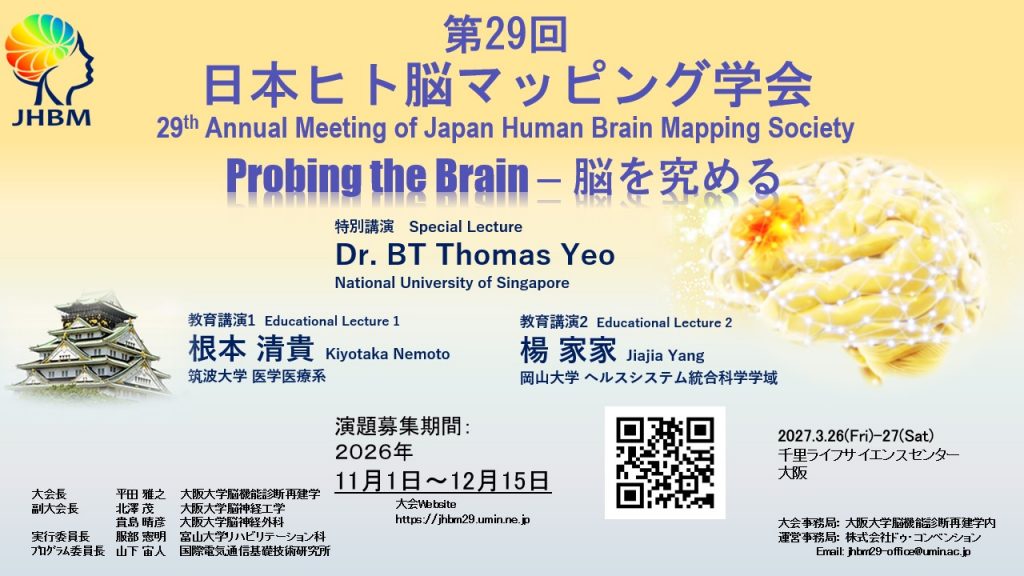
Announcement of the 29th Annual Meeting of Japan Human Brain Mapping Society
The 29th Annual Meeting of Japan Human Brain Mapping Society will be held on March 26–27, 2027, at the Senri Life Science Center in Osaka, under the chairmanship of Professor Masayuki Hirata of Osaka University.
The conference will provide a forum for sharing the latest advances in brain function research and fostering new developments through collaboration among industry, academia, and medicine.→The 29th Annual Meeting of Japan Human Brain Mapping Society
-
2026.07.02
The Ministry of Health, Labour and Welfare has released the evaluation criteria for next‑generation medical devices, including implantable BMI technologies.
Professor Hirata contributed to the formulation of these criteria as a member of the task force.
-
2026.07.02
The clinical trial notification for the implantable BMI system developed by our laboratory has been submitted to and accepted by the PMDA.
The implantable BMI system under development in our course has now been submitted to the PMDA as a clinical trial notification, accepted, and published as primary clinical trial information.
-
2026.07.02
Professor Hirata was featured in Kyoto iCAP’s “Stories,” where he discussed the development of implantable BCI technology.
In the interview, he talked about the background of the implantable BCI project as well as the collaborative research with JiMED Inc., the co‑creation partner of the course.